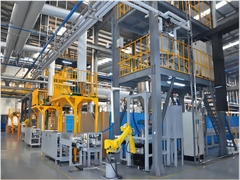
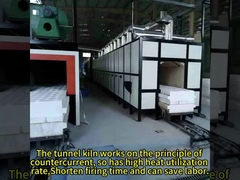
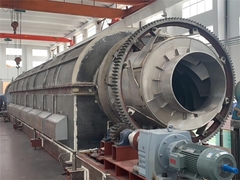
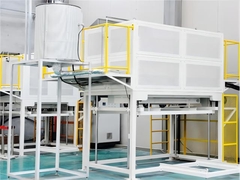
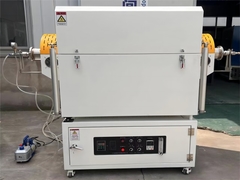
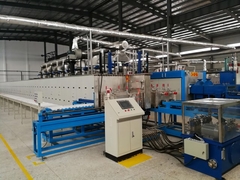
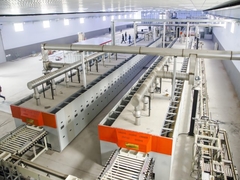
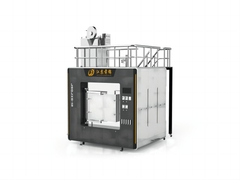
Brief: This video frames the solution within typical operational contexts for clearer understanding. Watch as we demonstrate how Pit-Type Annealing Furnaces provide essential heat treatment solutions for forging and heavy industry applications. You'll see the furnace structure, control systems, and temperature capabilities in action, showcasing how they handle various metal components like forgings, castings, and steel structures.
Related Product Features:
Available in high-temperature (1200°C), medium-temperature (950°C), and low-temperature (650°C) models to match specific product requirements.
Customizable furnace size and load capacity designed according to customer specifications.
Advanced control systems using contactors, thyristors, solid-state relays, and PLC for precise operation.
Multiple recording options including circular chart recorders, multi-point paper recorders, or LCD paperless recorders.
Furnace body constructed from full-fiber aluminum silicate spun fiber blankets for optimal insulation.
Heating elements utilize durable resistance wires and resistance bands for efficient performance.
Furnace lid features manual or mechanical transmission systems tailored to operational needs.
Suitable for heat treatment processes including quenching, tempering, annealing, and normalizing of various metal components.
FAQs:
What industries are Pit-Type Annealing Furnaces suitable for?
These furnaces are designed for heat treatment workshops in steel mills, special steel manufacturing, machinery processing, chemical machinery, heavy industry, metallurgy, casting, forging, flange rings, steel structures, and various mechanical supporting enterprises.
What temperature ranges are available for these annealing furnaces?
Pit-Type Annealing Furnaces are available in three temperature ranges: high-temperature models up to 1200°C, medium-temperature models within 950°C, and low-temperature annealing furnaces within 650°C.
What types of heat treatment processes can these furnaces perform?
They are suitable for various heat treatment processes including stainless steel solution treatment, high-manganese steel quenching, and processes like quenching, tempering, annealing, and normalizing for components such as valves, flange rings, pressure vessels, and automotive parts.